Streets & daily life
A labyrinth of alleys, "shebeke" oriel windows, carpets and copper, tea houses and film cameras — an Old City where people still live.
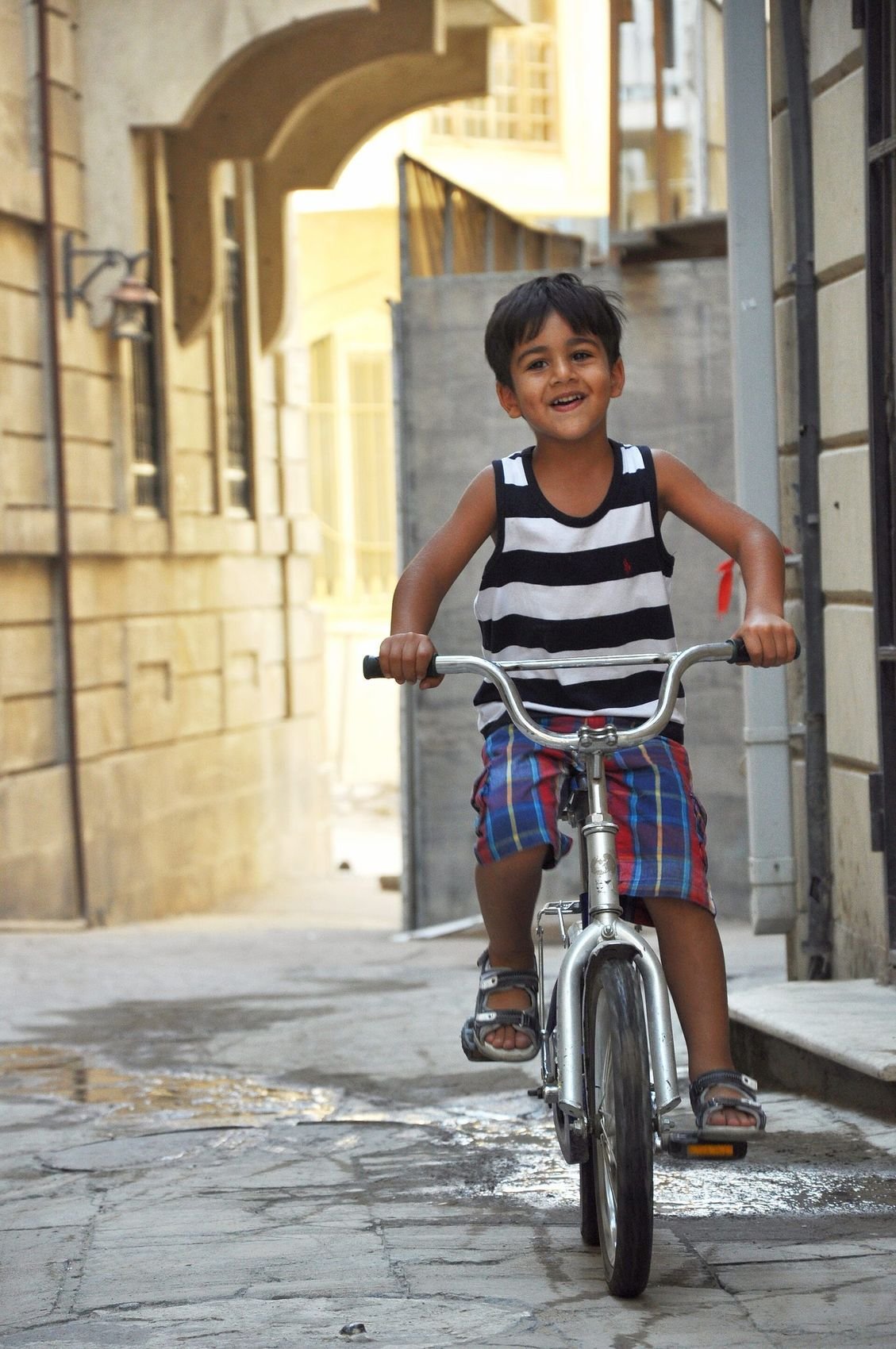
The labyrinth
İçərişəhər's layout is medieval: narrow winding streets, dead ends and passageway courtyards, designed for the pedestrian and for shade rather than for cars. Houses cling to one another, leaning over the street with wooden and glass oriel windows — "shebeke." In the heat such alleys offer welcome coolness, and getting lost in them is part of the pleasure.
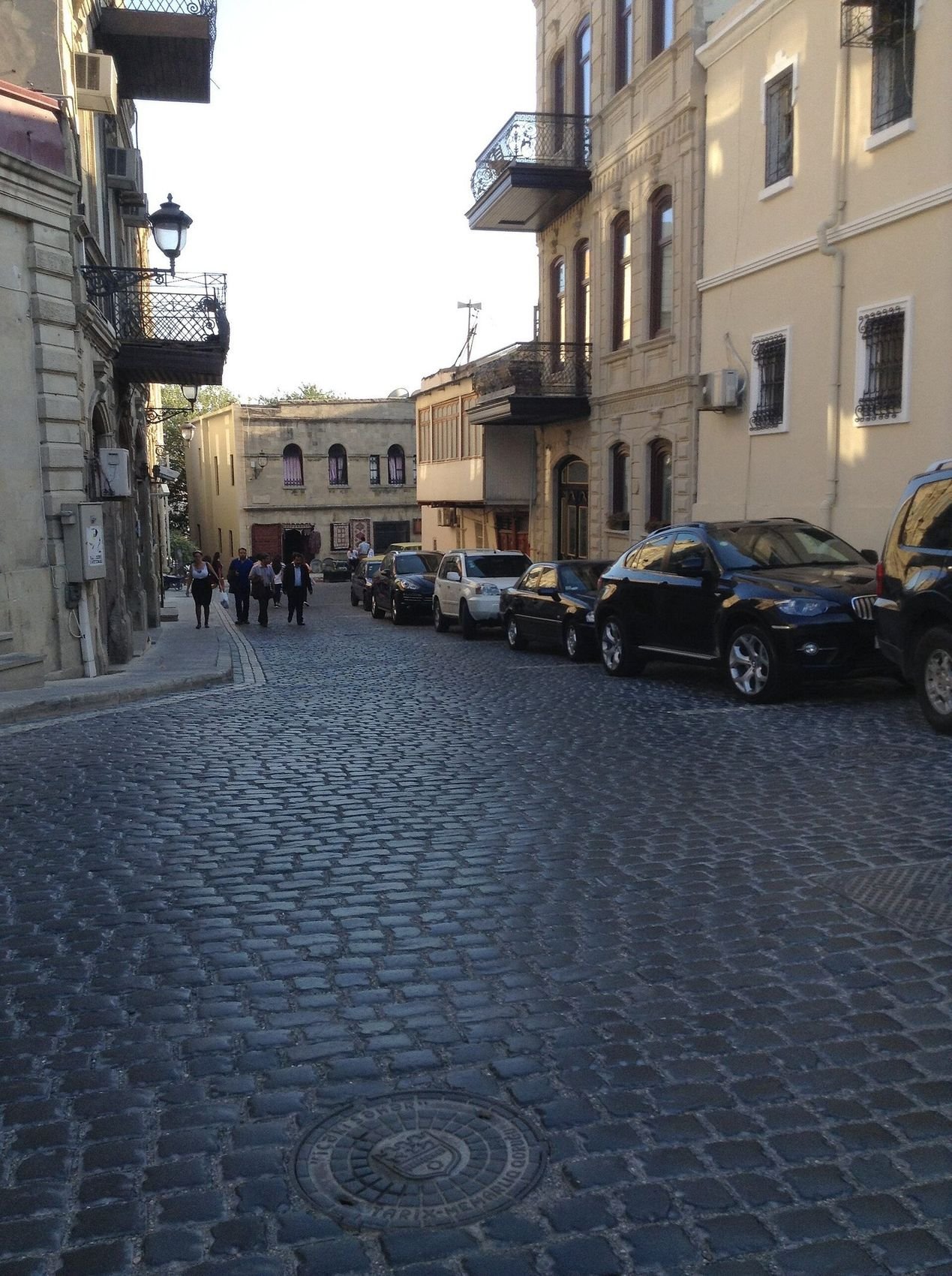
Crafts and trade
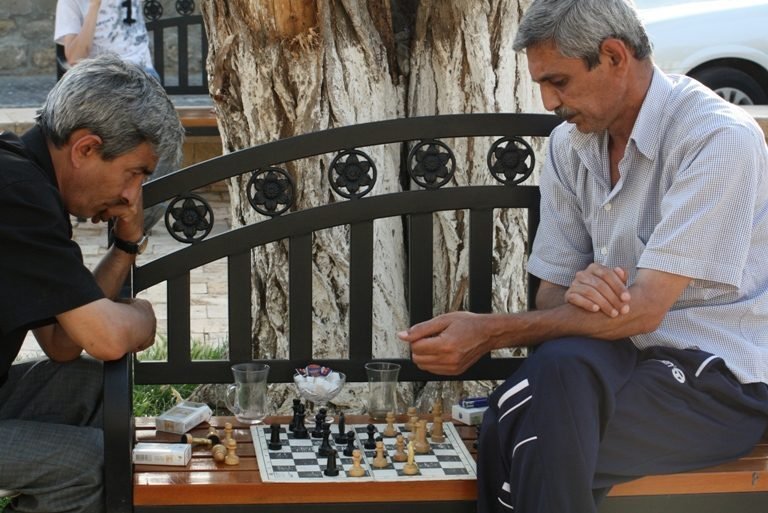
For centuries the Old City was a place of crafts and commerce: carpet weaving, copper chasing, jewellery making, and the making of weapons and musical instruments. Today the wall niches and former caravanserais hold workshops and shops selling carpets, copperware, miniatures and souvenirs, while in the courtyards people still play backgammon and chess over a samovar.
The city as a film set
İçərişəhər's textured streets have served as a filming location more than once — old Baku could easily "play" Eastern and foreign cities. Over half a century the fortress has appeared in a dozen well-known films: in some it stood in for Buenos Aires, in others for Istanbul, and in others it simply remained itself.
The Old City on screen
The best-known films shot within the walls of İçərişəhər, and the roles the fortress "played" in them.
Amphibian Man
The "Buenos Aires" scenes were shot in the Old City: a foreign firm's advertising sign was even hung up by the Maiden Tower.
O olmasın, bu olsun (If Not This One, Then That)
A screen version of Uzeyir Hajibeyov's operetta; some scenes were filmed in the fortress, including in the Agha Mikayil bath.
Aybolit-66
Episodes of Rolan Bykov's musical film were shot among the old fortress walls.
The Diamond Arm
Old Baku "played" Istanbul: foreign cars and donkeys were brought in, and a street traffic officer was dressed in Turkish uniform. The most famous scene is below.
Teheran-43
A spy drama by Alov and Naumov; the fortress's narrow streets suited the "foreign" episodes.
Don't Be Afraid, I'm With You!
Yuli Gusman's musical eastern was filmed in Azerbaijan, including in the Old City.
"Damn it!"
The scene in which Semyon Semyonovich Gorbunkov slips, falls and utters the line that became a catchphrase was shot in a narrow alley off Small Fortress Street (Kiçik Qala). Baku residents call this spot "Damn it" to this day, and it is still shown to tourists.
According to a story about the shoot, no banana peel — the one the hero was supposed to slip on — could be found in Baku at the time, so it was replaced with watermelon rinds, which were plentiful at the local bazaars.
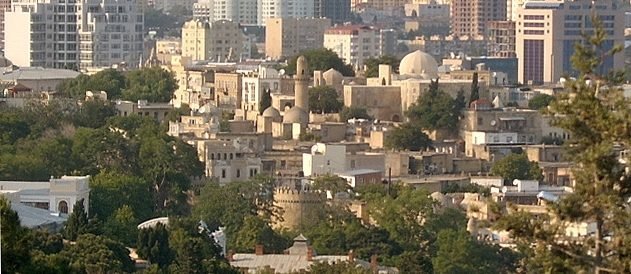
A home, not a museum
İçərişəhər's defining feature is that it is still a residential quarter: behind the museum-like façades is ordinary city life — schools, shops, laundry on lines and cats on warm stones. It is precisely this lived-in quality that sets the Baku fortress apart from preserved "museum towns" and makes a walk here feel alive.
The list is not exhaustive — old Baku was filmed in other pictures too (for example, "The Day Has Passed"); in some sources the years and attributions differ. The detail about the watermelon rinds is part of the oral history of "The Diamond Arm" shoot.